
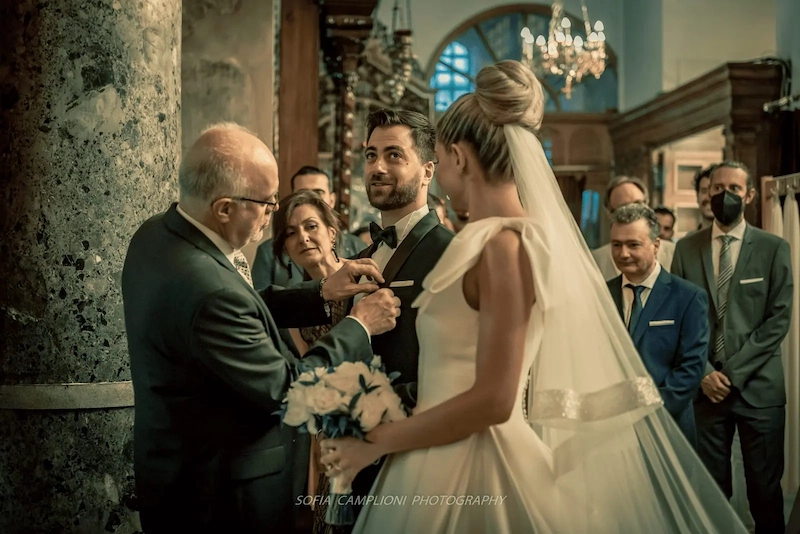
Understanding the sacred roles of koumbaro and koumbara is essential for planning a Greek Orthodox Wedding. These sacred responsibilities are just one aspect of Greek wedding traditions that make your celebration uniquely meaningful.
Table of Contents
The koumbaro and koumbara are far more than Greek versions of best man and maid of honor. These spiritual sponsors (collectively known as koumbaros) hold profound religious significance in Orthodox wedding ceremonies, serving as sacred witnesses with lifelong commitments extending beyond your wedding day.
I learned this at my own Greek Orthodox wedding. Choosing koumbaro and koumbara needs careful thought. You must consider both spiritual qualifications and practical duties.
This complete guide covers everything you need to know about these honored roles.
What Are Koumbaro and Koumbara?
Koumbaro (male) and koumbara (female) are the Greek Orthodox wedding sponsors who serve as spiritual witnesses during the sacred marriage ceremony. Unlike Western wedding roles, these positions require specific religious qualifications and involve active participation in holy rituals.
Koumbara Meaning and Significance
The term “koumbara” derives from the Greek word for spiritual kinship, reflecting a bond that extends far beyond friendship. Koumbara responsibilities include performing sacred duties during the crowning ceremony and traditionally becoming the godmother to the couple’s first child.
Koumbaro Meaning and Traditional Role
“Koumbaro” represents the male spiritual sponsor who typically leads the ceremonial exchanges during Orthodox wedding rituals. The koumbaro meaning encompasses both religious witness and lifelong spiritual guidance for the married couple.
Together in Greek they are known as “Koumbaros.”
Key Distinction: These are spiritual sponsors, not simply honored friends. Their role carries religious weight that cannot be delegated to non-Orthodox participants.
Koumbaro and Koumbara Requirements
Can I Pick Anyone to Be My Koumbaro or Koumbara?

No – the Greek Orthodox Church has strict canonical requirements for who can serve as wedding sponsors:
Essential Qualifications:
- Must be Orthodox Christians in good standing
- Require a Letter of Good Standing from their Orthodox parish
- If married, must have had an Orthodox wedding ceremony
- Should be actively involved in their Orthodox church community
What This Means for Planning: Your best friend cannot automatically serve as koumbaro or koumbara unless they meet these Orthodox Christian requirements. However, non-Orthodox friends can still participate in your wedding party in other meaningful ways.
Real Wedding Example
My Koumbara’s Situation: My koumbara was baptized into the Greek Orthodox faith. However, she had a civil wedding in Greece. Fortunately, our priest was lenient and allowed her participation.
My Husband’s Best Man: My husband’s Catholic best man faced different restrictions. He wasn’t allowed to perform traditional koumbaro duties. Instead, he gave the rings to the priest beforehand. He stood with us during the ceremony in a supportive role.
Planning Tip: Communicate early with your priest about special circumstances. Each priest has discretion in these matters. Don’t assume what will or won’t be allowed.
Sacred Ceremonial Duties
The koumbaro and koumbara perform essential religious rituals that validate your Orthodox marriage:
Ring Exchange Ceremony

- The Priest blesses the wedding rings three times
- Koumbaro and koumbara exchange rings between the bride and groom three times
- Symbolizes the couple’s commitment and spiritual union
- Parish variations: Some churches allow simplified ring placement
Crowning Ceremony (Stefana)

- The Priest places the stefana (wedding crowns) on the couple’s heads
- Koumbaro exchanges the stefana three times between the bride and groom
- Koumbara assists in the sacred crowning ritual
- Represents the couple becoming king and queen of their household
Common Cup Ritual

- Both sponsors assist the couple in drinking blessed wine
- Symbolizes Christ’s miracle at Cana and shared married life
- Demonstrates the sponsors’ commitment to supporting the marriage
Dance of Isaiah
- Koumbaro and koumbara follow the couple around the altar three times
- Hold the Stefana ribbons together during the ceremonial walk
- Represents their ongoing support for the marriage journey
Modern vs Traditional Koumbaro and Koumbara Responsibilities
Traditional Orthodox Approach
Sacred Duties Only:
- Krevati (bed making ceremony) preparation
- Ceremonial shaving of the groom (koumbaro tradition)
- Wedding day spiritual support and ritual participation
- Focus on religious significance, not party planning

Modern Hybrid Approach

Dual Role Expectations:
- All traditional Orthodox duties (non-negotiable for the valid ceremony)
- PLUS Western wedding party responsibilities
- Bachelor/bachelorette party planning
- Koumbara and the bride’s closest friends help the bride get dressed and ready
- Speeches and modern wedding logistics
Important Distinction: Bachelor and bachelorette parties are NOT traditional koumbaro/koumbara responsibilities. These are modern Western additions only applicable when serving dual roles.
Planning Tip: Many couples today split responsibilities – koumbaro/koumbara handle sacred duties while other friends organize bachelor/bachelorette parties. This honors Orthodox traditions while embracing modern celebrations.
Complete Koumbaro and Koumbara Cost Breakdown
Traditional Orthodox Expenses: €540-1,350
Ceremonial Items
- Stefana (wedding crowns): €150-400
- Silver tray for the Stefana: €50-100
- Lambades (ceremonial candles): €30-80
- Wine carafe and cup for Common Cup: €40-120
Church Services & Gratuity
- Priest fees: €100-300 (varies by parish)
- Chanter services: €50-150
- Church cleaning tip: €20-50 (customary)
Personal Expenses
- Ceremonial attire: €200-500
- Wedding gift: €100-300 (traditional)
- Travel expenses: Varies by location
Modern Hybrid Costs: €810-2,070
- All traditional Orthodox expenses (required)
- PLUS bachelor/bachelorette party planning: +€270-720
- Additional Western wedding duties: +€100-200
Cost-Saving Strategy: Many couples split ceremonial costs between koumbaro and koumbara, or delegate party planning to other friends while honoring Orthodox traditions.
The financial responsibilities of koumbaro and koumbara should be factored into your overall Greek wedding budget. While they handle ceremonial items, you’ll need to plan for venue costs and traditional Greek wedding food separately.
Koumbaro vs Best Man: Complete Comparison
| Aspect | Best Man & Maid of Honor | Koumbaro & Koumbara |
|---|---|---|
| Religious Requirement | No specific faith required | Must be Orthodox Christians in good standing |
| Role Type | Wedding party attendants | Spiritual sponsors and sacred witnesses |
| Ceremonial Duties | Hold rings/bouquet, sign certificate | Exchange of rings & Stefana, perform sacred rituals |
| Pre-Wedding Responsibilities | Plan bachelor/bachelorette parties | Krevati ceremony, spiritual preparation |
| Financial Responsibilities | Party costs, personal expenses (€180-720) | Sacred items, priest fees (€540-1,350+) |
| Long-term Commitment | Friendship continues | Lifelong spiritual kinship – become godparents |
| Selection Criteria | Closest friend/family member | Orthodox Christians with a spiritual connection |
Bookmark this comparison! Many couples share it with family to explain Greek Orthodox wedding roles.
Planning Your Greek Orthodox Wedding Roles
Choosing Your Koumbaro and Koumbara
- Prioritize Orthodox faith over party planning abilities
- Confirm Greek Orthodox church membership and obtain Letters of Good Standing
- Discuss expectations early – traditional vs modern responsibilities
- Consider splitting roles – Orthodox sponsors for the ceremony, friends for the parties
Working with Your Priest
- Discuss any special circumstances (mixed-faith sponsors, etc.)
- Schedule an early consultation about sponsor requirements
- Review ceremonial procedures specific to your parish
- Confirm cost expectations for church services and gratuities
Budget Planning Tips
- Traditional approach: €540-1,350 per sponsor
- Split ceremonial costs between koumbaro and koumbara
- Delegate party planning to reduce the sponsor’s financial burden
- The couple’s contribution to sacred items shows respect
Final Thoughts…

Organising and navigating the rich tapestry of a destination wedding in Greece comes with challenges. If you want to honour the symbolic Greek Orthodox wedding roles of Koumbaro and Koumbara, there are significant things to consider. As you can see, these roles carry important responsibilities.
Ultimately, your priest can provide clarity, but the miles between you may test your patience! Decide if you want official Spiritual Sponsors. Or, as with my husband’s Best Man, you assign roles to involve them in your special day.
Many of you may not follow the official Greek Orthodox route. In that case, these roles can play a cultural rather than an official role during the ceremony. You can nominate your koumbaro and koumbara ‘unofficially’ as my husband did and they can still play important roles during your wedding. For example at our wedding they were tasked with filling the dance floor during traditional Greek wedding music and dancing part of the reception and keeping the party alive.
I hope I’ve given you plenty to consider. These remarkable roles lovingly reflect faith. They represent lifelong support and traditional values.
For more Greek Orthodox wedding planning guidance, explore our complete guide to Greek wedding traditions and customs.
To explore my curated list of Wedding Venues across Greece, explore my venue directory.
Frequently Asked Questions
Koumbara derives from the Greek word for “spiritual kinship” and refers to the female spiritual sponsor in Greek Orthodox weddings who assists in sacred ceremonies and traditionally becomes the godmother to the couple’s first child. Unlike a maid of honor, the koumbara must be an Orthodox Christian and perform religious duties during the ceremony.
No – bachelor and bachelorette parties are not traditional koumbaro/koumbara responsibilities. Traditional Greek Orthodox celebrations focus on family-centered events like the Krevati (bed-making ceremony). Party planning is only added when serving dual roles as both Orthodox sponsor and Western wedding attendant. This doesn’t mean you can’t agree with them to do so (since this is the modern take on the role).
Yes – Orthodox canonical law requires koumbaro and koumbara to be baptized Orthodox Christians in good standing with the church. This includes all forms of the Orthodox Christian faith (e.g. Serbian, Russian, Romanian Orthodox). Non-Orthodox friends can participate in your wedding party, but cannot perform the sacred ceremonial duties. As mentioned, consult your priest as our Best Man was allowed to stand together with us, just not participate in handing the rings or touching the Stefanas.
The koumbara is a spiritual sponsor who performs sacred Orthodox rituals and requires religious qualifications. A maid of honor is a social attendant focused on wedding logistics and friendship support. Many couples today ask their koumbara to serve both roles.
Traditional Orthodox responsibilities: €540-1,350 covering stefana, priest fees, and ceremonial items. Modern hybrid roles (including Western party planning): €810-2,070. Costs vary significantly based on parish requirements and whether they’re serving dual roles.
Read more about Greek Wedding Culture

Greek Wedding Traditions and Rituals: A Guide to Symbolic Customs
Discover meaningful Greek wedding traditions and rituals. Honor your heritage with symbolic customs that make your ceremony special.

Traditional Greek Wedding Music, Dancing & Party Culture
Experience authentic Greek wedding traditions with our complete guide to music, dancing, and celebration culture. Plan your perfect day!

A Taste of Greece: Exploring Authentic Greek Wedding Cuisine
Savor traditional Greek wedding cuisine with authentic recipes and menu ideas. Create an unforgettable culinary experience for guests!
