

How I know this: I am Greek, I planned my own wedding in Chania, Crete from the Netherlands in May 2024, and I found almost every vendor the way locals do, by asking, after I parted ways with the planner I first hired.
The single biggest thing nobody tells couples planning a Greek wedding from abroad is this: the good vendors are not on Google. Here is how the network really works, and how to reach it when you do not know a soul on the island.
How do you actually find good wedding vendors in Greece?
You ask people. In Greece the best wedding vendors are found through word of mouth, not Google: a trusted local recommends a caterer, the caterer recommends a florist, and the same good names keep surfacing until you know who is real. My husband named this hidden network the “Greegle,” the Greek Google.
The catch for a foreign couple is that you have no one to ask. Many of the strongest photographers, caterers, and venues on an island like Crete have almost no online presence, because they never needed one. Locals fill their calendars for them.
So the couple planning from abroad, scrolling Instagram and five-star reviews, sees only the vendors who market to outsiders. That is not the same list the locals use. The fix is to plug into the network through one trusted person, usually your venue owner, who recommends only people whose reputation reflects back on their own. Start with the venue, ask everyone you meet for their preferred suppliers, and notice which names repeat. Repetition is the signal.
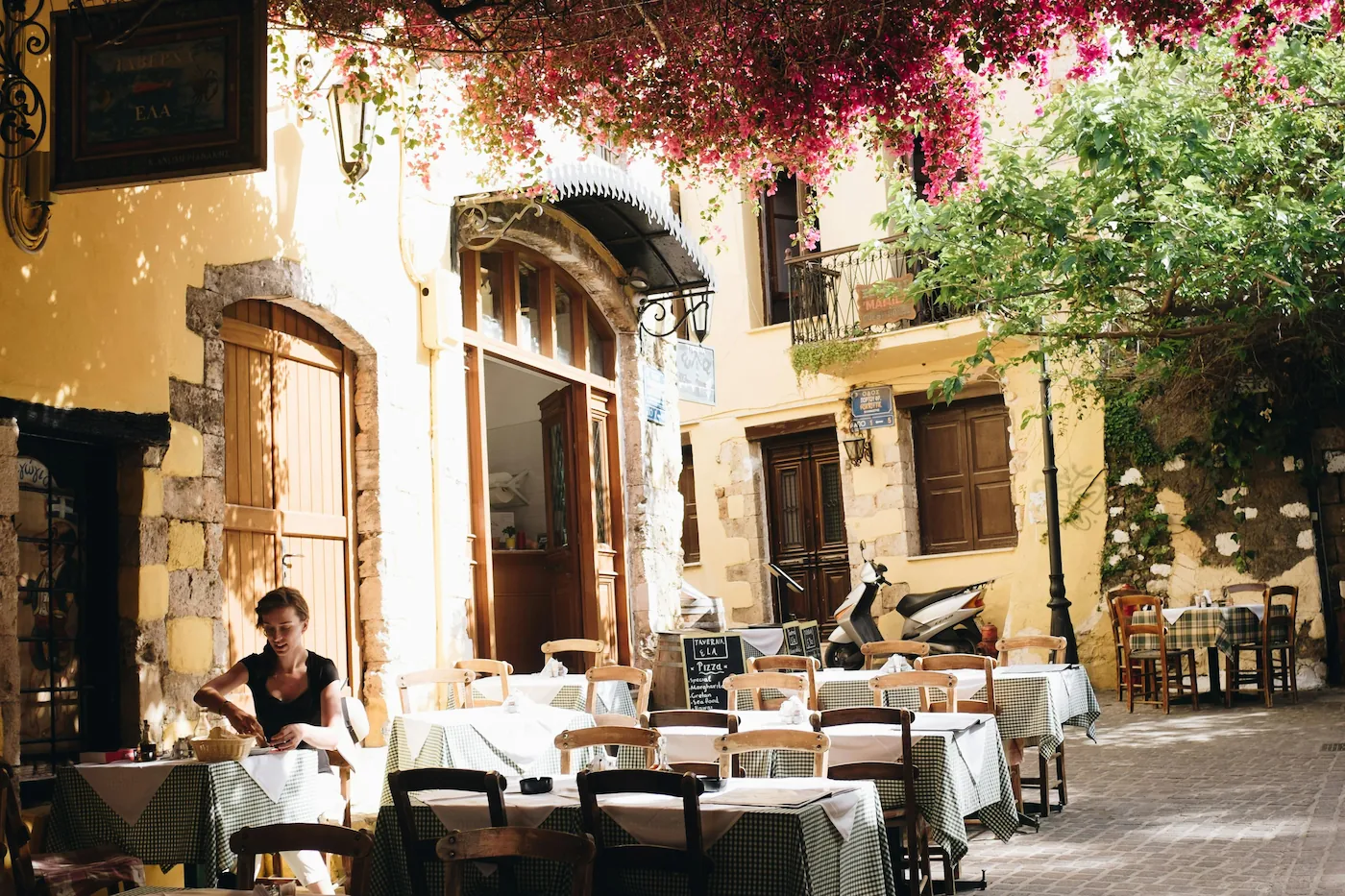
What I learned by parting ways with my wedding planner in Crete
We started the way most international couples do. We searched Instagram, read reviews, liked the pitch of a planner, signed her contract, and paid a deposit against a roughly €2,500 fee.
It did not fit us. She sent us “venues” that were really villas with gardens, and scheduled viewings an hour away in towns we had just left. Then a family friend, who happened to know her, quietly warned us to be careful.
The moment it became clear was around a food tasting with one of the best caterers on the island. The deposit she asked us to pay was about triple the real tasting fee. I only found that out because I called the caterer directly and asked. She had tried to keep the difference.
We ended the arrangement and lost about €600 of the deposit. That experience is the reason this whole site exists: so no other couple has to learn this the expensive way.
What is the “Greegle,” and why does word of mouth beat Google in Greece?
The Greegle is the network of relationships Greeks build over a lifetime, and the trust that travels along it. Ask the right first person, and they instantly hand you the three or four people they vouch for. That recommendation carries more weight than any star rating.
To a Northern European, transactional mind, this feels backward. You expect to email a supplier, get options, get a quote. In Crete, social media barely moves the needle unless a local vouches for you first. That was exactly what we were missing: the locals.
Once we found our venue, everything opened up. Eleana, the owner of Metohi Istoria where we married, generously pointed us toward the good professionals. So did the caterers and venues we visited. We found our caterer, Moderno, our coordinator, and the rest of the team the same way: someone we trusted said a name, and then we kept hearing it again.
That is the Greegle. The same good name keeps coming up, because people do not stake their own reputation on someone who will let them down.

Why don’t all the best Greek wedding vendors have a website?
Some of them do, and some of them don’t. Greece is still catching up as a digital market for weddings, and plenty of vendors with the deepest local reputation get booked on word of mouth alone, year after year, so a polished website was never something they needed.
Our venue is the clearest example. When we asked locals for beautiful places with little online presence, two names came up that were almost impossible to find on Google. One of them became our wedding. At the time it was in its first year as a venue, a restored historic site, rustic and elegant, and affordable precisely because it was just starting out. When we found it, it barely had a working website or email. Today it has a lovely one, and you can find Metohi Istoria here.
This is why in-person visits matter so much. One winery we had all but chosen looked perfect online: gorgeous photos, award-winning wines. In person, the setting was not what the pictures promised, and we would never have known from a screen. Visiting the island before you commit was one of the best decisions we made.
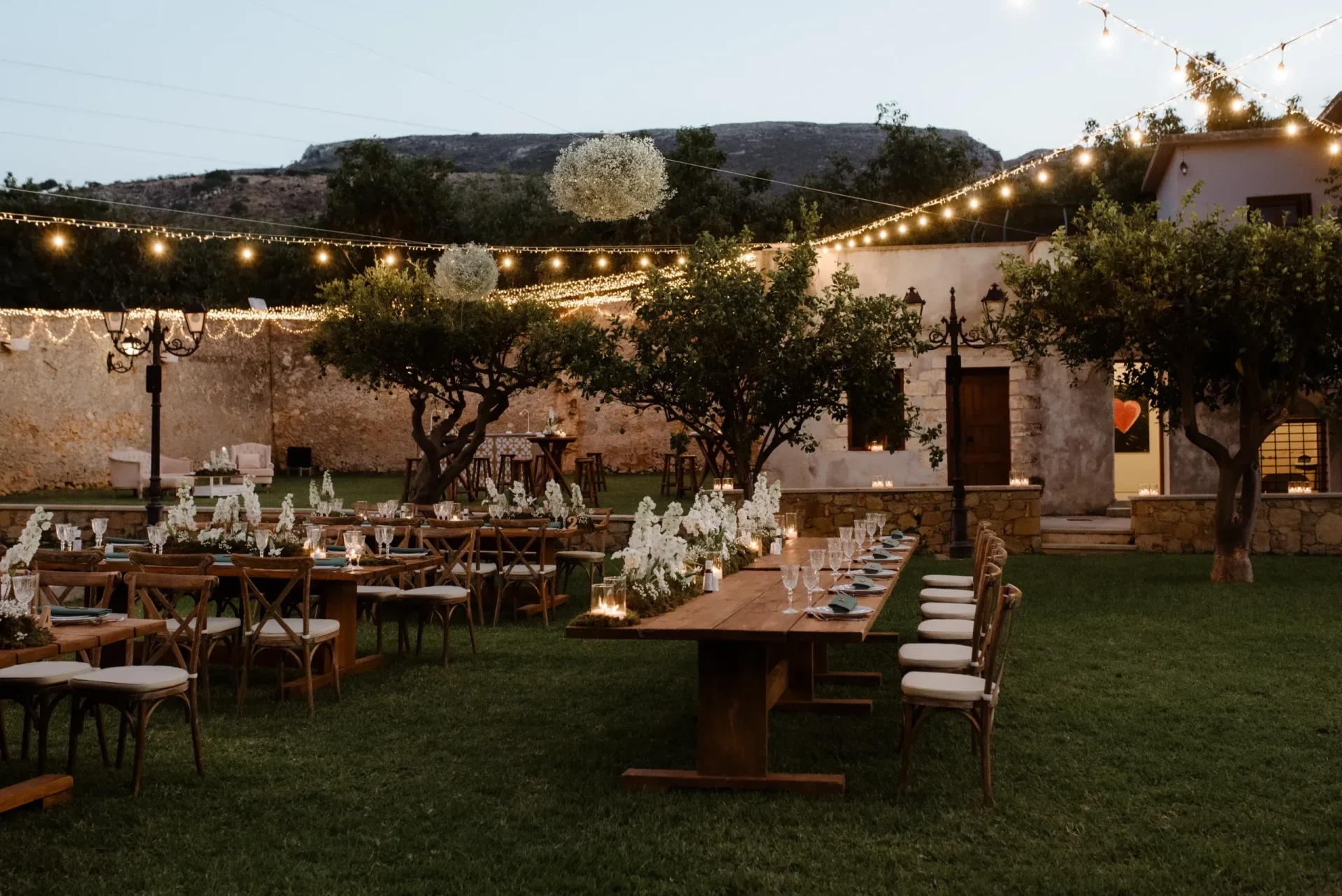
Why do Greek vendors go quiet in peak season?
Because from roughly May through September, every good vendor on the island is delivering weddings, not planning yours. Caterers sometimes cover two weddings in a single day. Your emails and calls may go unanswered, and it is not personal.
I learned this the hard way. We booked our venue in the spring, then started reaching out to vendors just as the season took off. Silence. I was patient, waited, and revisited every vendor in September and October, once the season had wound down. Suddenly everyone was responsive.
So plan your outreach for the shoulder months, September through spring, and do not read a slow reply in July as rudeness. It usually just means they are in the middle of someone else’s wedding day.
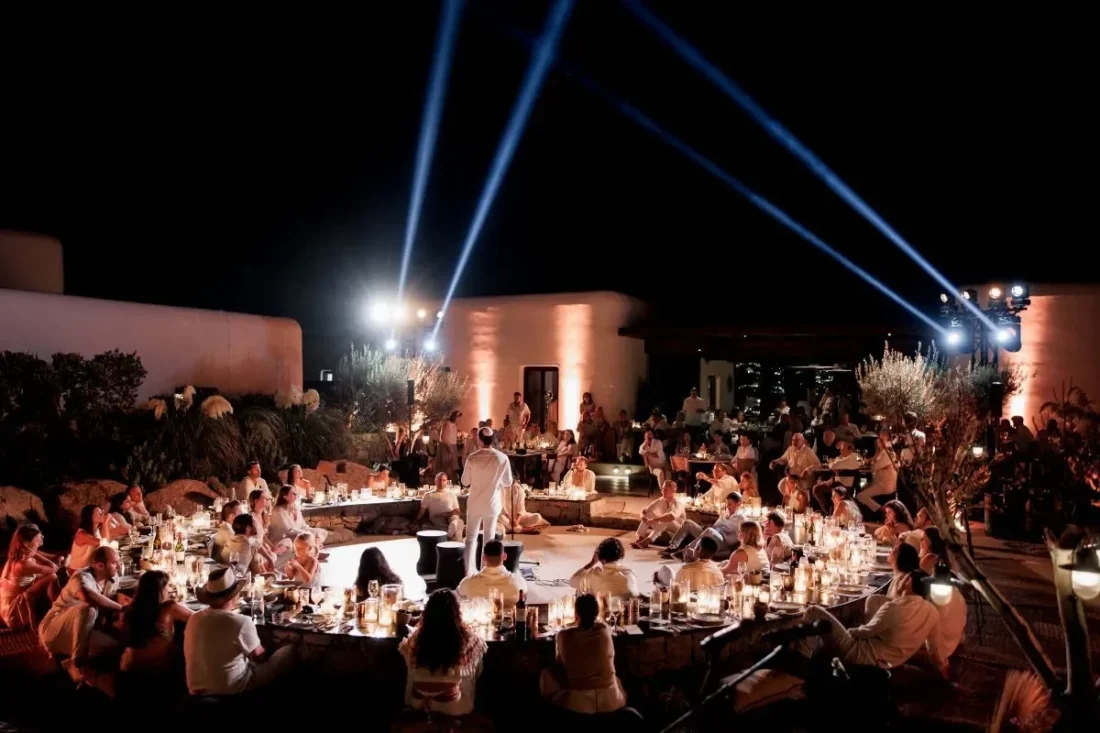
How do you know a vendor or planner is the right fit?
Slowly, and in person. In Greece trust is built face to face, not over a contract, so give it time and let the relationship do the vetting.
We met most of our vendors two or three times, two or three hours each, and often we barely discussed the wedding at first. The first meeting is just getting to know each other. Our mixologist, Lefteris of The Alchemist, wanted us to sit in his bar over a few evenings before he would commit. That is normal, and it is a good sign, not a delay.
A few simple habits make the fit clear. Ask every vendor for their own preferred suppliers, and notice which names keep repeating across different people. Ask for prices in writing, so everyone is working from the same numbers. And pay attention to how you are treated before any money changes hands. Warmth, straight answers, and pride in the work travel further here than a polished brochure. For what it is worth, I take no commission from any vendor, so the names I share are simply the ones I would use again myself.

What if you can’t ask? How a foreign couple borrows the Greegle
If you do not know a single local, you borrow the network through one trusted door, and in Greece that door is almost always the venue. Choose your venue first, then let the venue owner recommend the caterer, the coordinator, the florist, and the rest. They will only send you people whose work reflects back on them.
Two things to expect. First, trust is slow here, as I said, so build in time for those early meetings. Second, even a good coordinator is not a substitute for staying close to the details. Ours was well regarded, but I still ended up arranging our guest shuttles myself at the last minute, and I was glad I did. I found a wonderful company, Seven Plan, who ran our guests to and from the celebration late into the night and could not have been kinder. Even inside the network, you keep a hand on the moving parts.
Here is the honest reality, though. Most couples planning from abroad will never get to meet a vendor two or three times the way we did. If you are lucky, you get one trip, one chance to shake hands in person. So it really comes down to one of two things. Either you have a great planner, ideally a local one who already knows these vendors and has worked with them before, who can carry those relationships on your behalf. Or you make a single visit count: we met several caterers and toured about seven venues in person, and everything started with the venue. Choose the venue first, and the rest of the network tends to fall into place behind it.
And if you cannot line up a trusted local planner or fly out to do the rounds yourself, that is precisely the gap I built An Hour with Christina to fill. It is, honestly, renting my Greegle: my vetted names, and the questions to ask before you sign anything.
Frequently Asked Questions
Do you need a wedding planner to get married in Greece?
No, you do not need a full-service wedding planner to marry in Greece. Plenty of couples, myself included, plan the whole thing themselves once they have the right venue. What most couples do need is a good venue owner who recommends trusted vendors, and a day-of coordinator for the final stretch. I planned my own Crete wedding from the Netherlands, so it is absolutely doable, especially if you start with the venue and let its network carry you.
How much does a wedding planner cost in Greece?
The planner we first hired in Crete quoted around €2,500 for full-service planning. That is one real data point, not a market rate: full-service planning fees vary widely by island, guest count, and how much the planner handles. I would rather point you to real, current vendor quotes than invent a range. Our free Budget Calculator, built on real Greek vendor pricing, gives you a grounded number to plan around.
Why won’t Greek wedding vendors reply to my emails?
Usually because it is peak wedding season, roughly May through September, when every good vendor is delivering weddings rather than planning future ones. Caterers can run two weddings in a day. The busiest, most-recommended people are often the slowest to answer in summer. Reach out in the shoulder months, September through spring, and you will get far better responses. A slow reply in high season is normal, not a snub.
How do I find trustworthy wedding vendors in Greece from abroad?
Start with the venue, then follow its recommendations, and notice which names repeat across different people. That repetition is the trust network, the “Greegle,” doing your vetting for you. Ask every vendor for their preferred suppliers, visit in person if you possibly can, and get prices in writing. If you have no local to ask, that is exactly what a Greek insider is for, whether that is our vendor directory, Christina’s Picks, or a one-on-one call.
Should you visit Greece before booking your wedding vendors?
If you can, yes. A venue can look perfect online and feel completely different in person, from the setting to the noise to the drive your guests will actually make. Visiting also lets you meet vendors face to face, which is how trust is built here. If a scouting trip is not possible, lean on someone who already knows the ground, and get everything that matters in writing before you commit.
Talk it through before you book anyone
If you cannot fly to the island and ask around the way locals do, borrow someone who already has. An Hour with Christina is a straight, no-commission conversation: which venue fits your vision, which vendors are worth your time, and the exact questions to ask before you sign. You can also run real numbers first on our free Budget Calculator.
Still not sure what to actually book first?
In one hour on a call, I’ll help you map what to book and in what order, with no vendor commissions. You keep the whole plan in writing.
Founding rate, 15% off. Full refund if the hour doesn’t give you a clear way forward.
More on planning your Greek wedding
- Where to start planning a wedding in Greece
- The first 5 wedding vendors to book, and in what order
- What to look for when touring a wedding venue in Greece
- Planning a wedding in Crete: real costs and guide
- Browse the Greece wedding vendors directory and Christina’s Picks venues
Greece will not hand you its best vendors through a search bar. It hands them to you through people, one trusted name at a time. Find your first trusted person, whether that is a venue owner in Chania or me, and the rest of the network opens up. That is the whole secret, and it is a warmer way to plan than any five-star filter. Γεια μας, and here is to finding your people. Christina.
