

I planned our own wedding in Crete from the Netherlands, fired our planner halfway through, and I take no commission from any vendor, which is why I can publish numbers other people can’t.
About a quarter of the couples who write to me ask the same thing before they ask anything else: how many people will actually come? No study publishes a straight answer to it. So this page gives you the figure wedding planners actually work with, our own number from our own guest list with the working shown, and the nine things that genuinely move it.
Table of Contents
Quick answer: what share of guests actually come to a destination wedding
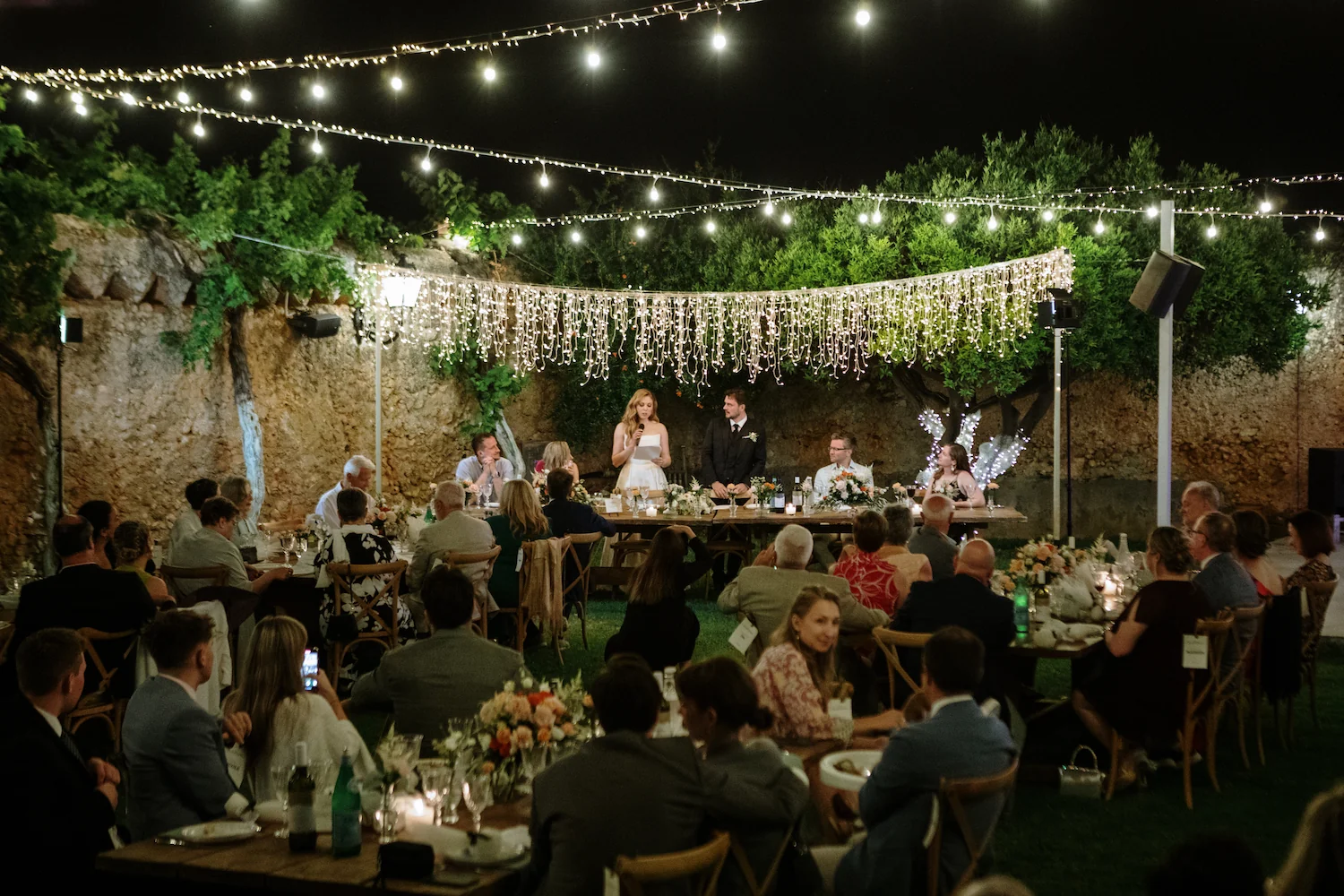
We invited 120 people from across six continents to Greece for our wedding. 96 came. That is roughly 80%, and it is one wedding, ours, planned by two people who did nine deliberate things to raise the number.
That is one wedding, not a benchmark. No study measures what share of guests attend a wedding abroad, so the working figure comes from wedding planners.
Planners are the people who genuinely know, because they watch hundreds of couples go through this exact question. Their rule of thumb is that 60-70% of invited guests say yes. Treat it as indicative rather than a promise: your own list can land well above it, the way ours did. Beyond that, what the evidence supports is direction. Cost per guest is the biggest reason people say no. How close they feel to you is second. Flight length, how much notice you give, and whether you help with accommodation come after that. Those four levers are yours to pull, and the nine things we did are further down this page.
If you’d rather start from your own circumstances than a rule of thumb, our free guest calculator takes that 60-70% band and adjusts it for your list.
How many guests will show up for your Greek wedding?
I built a free calculator using real destination wedding attendance patterns across Greece and the Mediterranean.
Customized to your specific situation.
Where our own number comes from
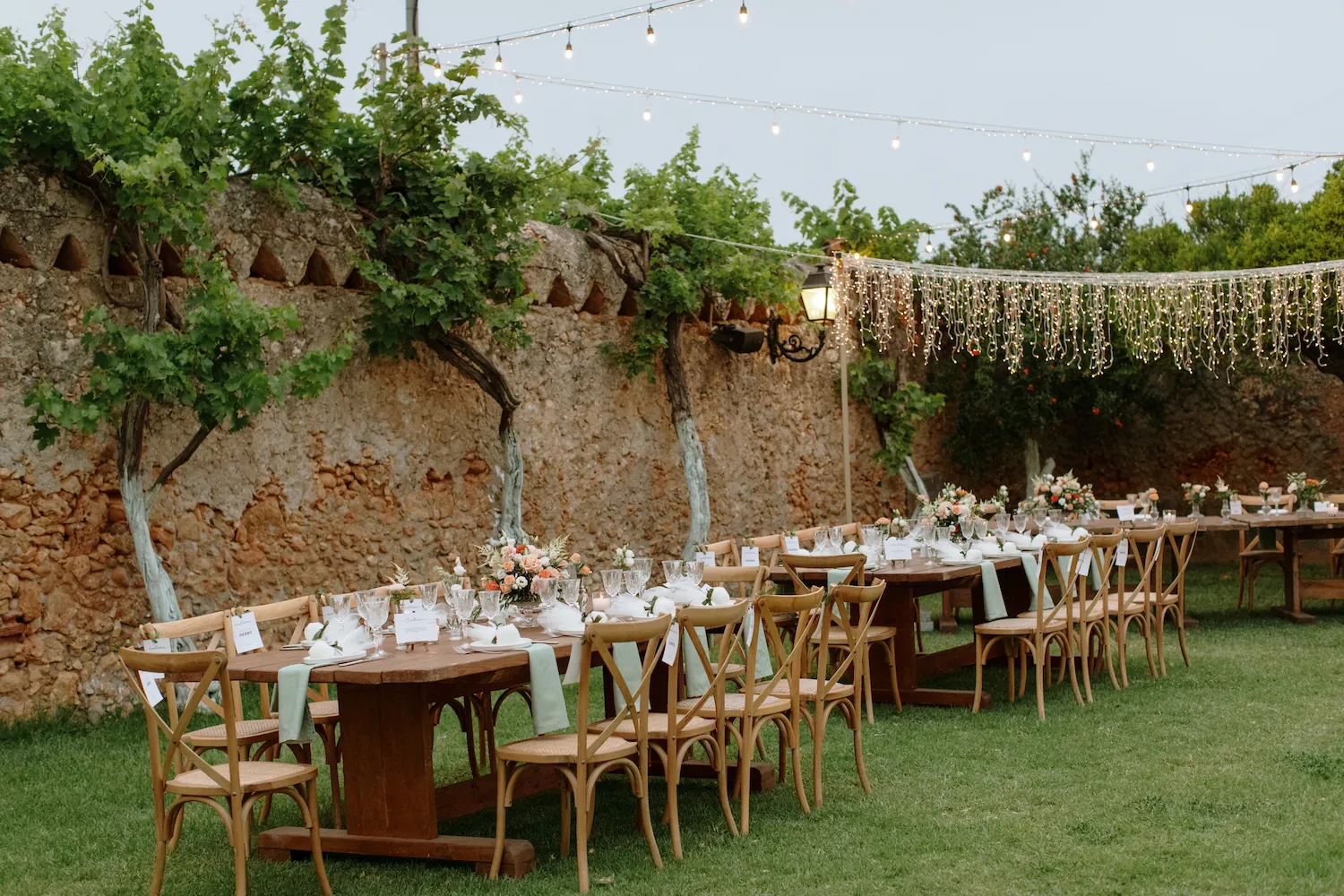
We got married at Metohi Istoria in Chania on 18 May 2024, with guests flying in from six continents. Initially, we planned for EUR 20,000 and spent EUR 37,933, and a big slice of the difference went on other people’s beds. So when I write about what makes guests turn up, I’m writing from our own invoices and our own list, not from a survey.
Here’s the part I’d rather not admit. Until very late, I didn’t know how many people were coming. The last people to reply to a wedding invitation are the Greeks, even the ones closest to us, even the ones with the shortest journey. That’s not a data point, it’s just what it felt like. Almost nobody has a final headcount early.
What we did to improve our attendance rate

Ensuring the Costs are Clear and Affordable
Our roughly 80% isn’t a benchmark and I won’t sell it as one. It’s one wedding, in Crete, in May, planned by two people who spent a year taking obstacles out of their guests’ way. Here’s what those obstacles were.
1. We capped the list with a rule, not a feeling. Three tests: we both had to know you, we had to feel close to you, and we had to expect you in our lives for the foreseeable future. It sounds cold written down. It made the list, and the day, warmer.
2. We gave our parents an allocation, not a veto. Each set of parents got 10 invitations to hand out as they chose, capped at 10. No negotiation, no drift, no great aunt neither of us had met.
3. We negotiated a group rate. Two hotels a two-minute walk apart in Chania, about 15% off, with a code that worked even for the guests we weren’t paying for. A hotel in shoulder season can’t be sure of selling out, so a guaranteed block in May is worth real money to them. Ask early, and ask in person if you can!
4. We paid for beds. Two nights’ accommodation for 11 close family, and the flights and accommodation for one family who otherwise couldn’t have come. That’s most of the reason we planned for EUR 20,000 and spent EUR 37,933. I’m not telling you to do it. I’m telling you what our attendance rate cost.
Removing Friction

Money gets people over the biggest hurdle. The rest of it is about making yes easy and no unnecessary.
5. We paid for the transport. A shuttle running every 30 minutes from 9pm to 2:30am cost EUR 250, and the buses for the church runs and the ride home cost EUR 800. Nobody had to think about a hire car or a drink they couldn’t have. One part of that did not work. The bus booked to collect everyone at the end of the night never came, and we scrambled to sort out taxis at the last minute. It worked out, but it was not seamlessly planned. Save local taxi numbers in your phone before the day, because there is no Uber on Crete.
6. We made it possible to bring the children. We welcomed guests to bring their kids to the wedding. The kids had an area of their own close by, with their own table, their own menu and an entertainer for a couple of hundred euros, within easy sight of the parents, so everyone could actually sit down and eat. Best decision we made all year! It’s also why some of those families came at all. There’s more on bringing children to a wedding in Greece if that’s your question.
7. We chose the date against a bank holiday. In the Netherlands the Monday was off, which made the trip a long weekend instead of two days of annual leave for a big part of our list. If you’re mostly inviting one country, check that country’s calendar before you fall in love with a date. There’s more on picking a date that suits your guests if that’s still open.
8. We took the guesswork out. A wedding website with flights, hotels, RSVP and allergies on it. A custom Google Map for Crete and Athens. A printed two-day schedule in every hotel room, and one WhatsApp group for everybody. A guest who can picture the whole weekend says yes faster than one who can’t.
The thing that mattered most

9. We made the trip worth taking. Athens as a stopover for the people flying from the States. Four days on an island people already wanted to see, with a wedding in the middle of it, rather than a wedding with a flight attached.
Every other lever on that list is a discount on a favor. This one changes what you’re asking for. Get it right and you’re not asking anybody to spend a thousand euros to watch you say two words. You’re giving them a reason to take the holiday they were half planning anyway, with everyone they like in the same small town.
If you only do one thing on this page, do this one. It’s free, it’s a decision rather than a cost, and it makes every other lever make sense.
Why Cost per Guest Matters for attendance rate
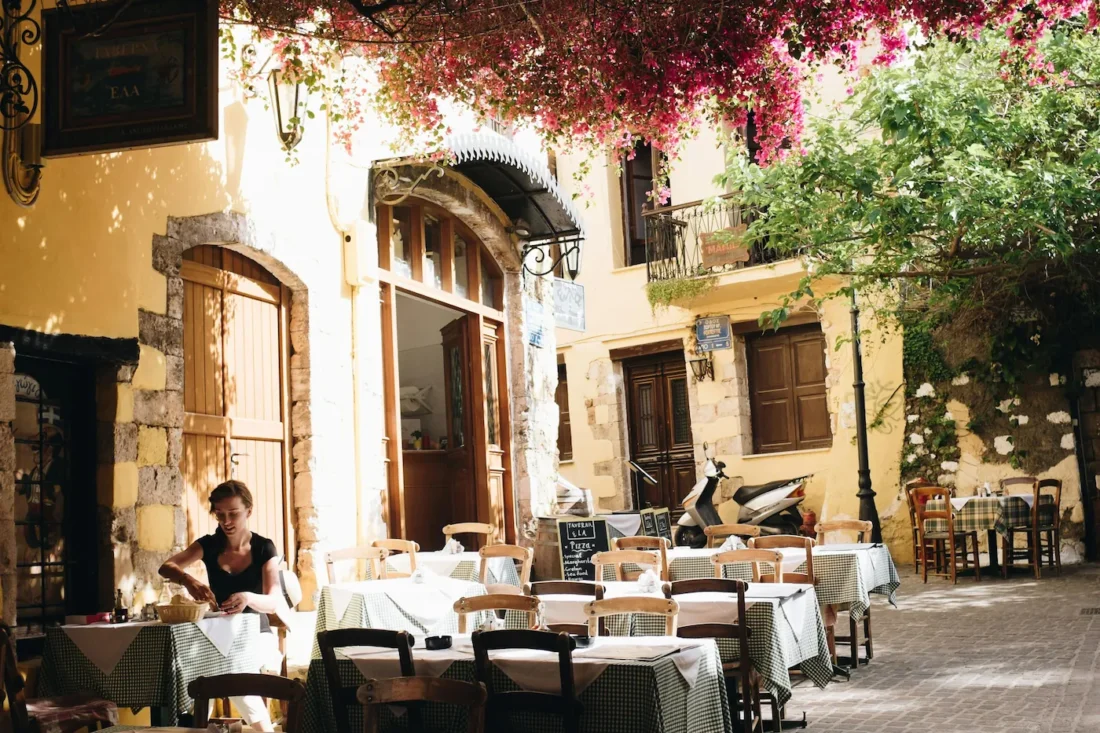
Those nine things aren’t random. They’re aimed at the four things that actually change who turns up, and money is first by a distance.
The American picture. Money is the reason given most often, and it isn’t close. 53.6% of Americans say the cost outweighs their desire to attend. Worth knowing what they were picturing, though. Only 16.5% counted a destination wedding as one in another country, so most had a domestic flight in mind, and 73.2% had never been to one at all.
The British picture. Sharper, more recent, and the one I’d read twice if your friends are in the UK. 38% of UK adults have turned down a wedding abroad in the past year, up from 29% the year before. That is 38% of people, not 38% of invitations. Of the ones who declined, 23% said they couldn’t afford the transport or the accommodation. Looking ahead, 45% say rising flight prices would stop them going to one.
Nine points in twelve months is the direction of travel, and the money side moves with it. Average spend per guest is now GBP 1,525, down from GBP 1,956 the year before. Guests are still coming. They’re coming on less money.
Which isn’t a reason to give up on Greece. It’s a reason to know what your invitation actually costs the person opening it.
The lever you actually hold is the total cost of your guest’s weekend, not the cost of your wedding. Flights, two or three nights, meals, a taxi. Work that number out early, honestly, and the rest of your planning gets easier. Knowing what a wedding in Greece actually costs is the first step to knowing what you’re asking of people.
What our own wedding cost per guest

Here’s our side of that ledger, with the working shown.
Our wedding cost EUR 37,933. 96 people came. That’s about EUR 395 a head. Measured against the 120 invitations we actually sent, it’s about EUR 316.
Those are two different questions. EUR 395 is what each person in the courtyard cost us. EUR 316 is what each name on the list cost us, and the list is the thing you’re deciding right now.
Two honest limits. That’s what a guest cost us, not what it cost them to come. Their own flights and hotel bills are not in that figure. And it’s one wedding: Crete, May, a couple who chose to pay for other people’s beds, which is exactly what pushes a per-head figure up. A real number, and a sample of one.
If you want your own version of it rather than mine, the calculator below is built on real Greek vendor quotes and it costs nothing.
I built a free calculator using real vendor quotes from across Greece. Enter your guest count and preferences and it builds a full estimate, VAT included.
How close guests feel to you is important

Money is the first reason. Relationships are the second, and they’re closer together than most couples expect.
Among those same Americans, 17.8% said they wouldn’t go because they don’t know the couple well enough to justify the cost, and another 11.8% said they don’t know the couple well enough to justify the time off. It was a single-select question, so those two add up cleanly: 29.6% gave a version of “we’re not that close” as their main reason. A further 27.2% said their answer depends entirely on their relationship with the couple.
That isn’t a scoreboard on how loved you are. It’s a filter on how much a person is willing to spend to be in a room with you. Those two things can feel identical, and they are not the same thing at all.
Planning implication: the closer your list, the higher your turnout. That’s an argument for a smaller list, not a braver one.
Flights, notice, and whether you help with the bill

Three more levers, and the evidence behind each one is a different strength.
Flight length. Published attendance figures are not broken down by journey length. Party size is, and it tells the story sideways. Among US couples, hometown weddings average 123 guests, domestic destination weddings 92, and international ones 69. That is average party size, not attendance rate. Couples planning a wedding abroad also invite fewer people. Our own inbox says something similar: of the 72 couples who’ve written to us, 45 volunteered a guest number, and the middle of that range is 70 expected guests.
Notice. There’s no measured figure for how much notice raises turnout. The advice in circulation is consistent though, and it’s sensible: get your save the dates out around nine to twelve months ahead for a wedding abroad, because your guest is booking flights, hotel nights and annual leave in one go.
Helping with the bill. Unproven in either direction. No study shows that paying for a hotel night raises attendance. There’s only the British finding above that guests are running out of money, and common sense doing the rest. We did it anyway, and I’d do it again.
If you’re frightened the wrong people will say no

No average will touch this one. The fear is rarely “will anyone come”. It’s “the people I care about most will be the ones who can’t”, and watching turnout sort itself by who has money and holiday allowance is genuinely painful.
There’s guilt sitting next to it, because your guests’ opinions are one search away. 56% of Americans agree it’s in poor taste for a couple to plan a destination wedding, and of the people who declined one, 30% said the relationship suffered afterwards. Separately, 37.2% agreed it’s selfish to expect guests to spend that money and time.
So no, you’re not imagining it. Some people do think this. What I’d hold onto is that those same surveys are full of people who’ve never been to a wedding abroad. In one of them, 73.2% had never attended a single one. They’re rating an idea, not a weekend they’ve lived through.
So ask kindly, ask early, take cost out where you can, and then let people choose. That is the whole of your job here, and it’s more than most couples do.
Eleven questions worth thinking through

A single percentage won’t settle this on its own, but you can stop guessing in the dark. These are the eleven things that plausibly change who turns up, and working through them honestly is how the planners’ starting point becomes your number.
- What the whole trip costs each guest: flights, nights, meals, transfers.
- Who’s actually on the list, and how close they are to you.
- How far most of them have to fly.
- How much notice they’ll get from save the date to wedding day.
- The age mix, and who on the list travels easily.
- How many people you’re inviting in total.
- Whether you’re covering anything, and for whom.
- Whether children are welcome, and what they’d do all evening.
- How many days you’re really asking people to take off.
- Passports and visas, and who might need renewing.
- Whether your date lands on or near a public holiday at home.
Answer those eleven honestly and you’ll know more about your own wedding than any published percentage could tell you.
Conclusion: Do not worry
Here’s where I’d leave it. Our guests arrived days early, swapped tips in one WhatsApp group, and by the last breakfast on the water most of them knew each other. That’s the thing no percentage can tell you: the people who come don’t experience a wedding, they experience four days with you.
So put the numbers down. What exists is the list in front of you, the people on it, and the nine decisions that make it easier for them to stand next to you in May. We made ours. 96 people got on planes. Whoever ends up in your courtyard in Greece, they’ll be the right ones.
Frequently asked questions about the destination wedding attendance rate
What percentage of guests actually attend a destination wedding?
No published study measures it. The most useful figure comes from wedding planners, who see hundreds of couples through this exact decision: destination weddings typically see 60-70% attendance. Treat it as indicative rather than final. Our own wedding in Crete came in above it. We invited 120 people. 96 came. That is roughly 80%, and it is one wedding, ours, planned by two people who did nine deliberate things to raise the number.
How many guests should we expect at a wedding in Greece?
Expect a smaller party than you’d have at home. Among US couples, hometown weddings average 123 guests, domestic destination weddings 92, and international ones 69. That is average party size, not attendance rate, and couples planning a wedding abroad also invite fewer people. Of the 72 couples who’ve written to us, 45 gave us a guest number and the middle of that range is 70 expected guests. Plan for a wedding of that size and you’ll rarely be shocked.
How much notice do guests need for a wedding abroad?
There’s no measured figure for how much notice raises attendance, so treat the standard advice as advice, not evidence. That advice is consistent across the industry: get save the dates out roughly nine to twelve months ahead of a wedding abroad. Your guest isn’t booking a Saturday. They’re booking flights, several hotel nights, annual leave and often childcare, and those four things have to line up before anyone can say yes with confidence.
Is it selfish to ask people to fly to Greece for our wedding?
You’re not wrong that some people think so, and it’s better to know it than to be blindsided by it. 56% of Americans agree it’s in poor taste for a couple to plan a destination wedding, and separately 37.2% agreed it’s selfish to expect guests to spend the money and the time. Both sets of answers are dominated by people who’ve never been to one: in one of them, 73.2% had never attended a destination wedding at all. Ask kindly, give notice, take cost out where you can, and let people choose.
Should we say adults only, and will it cost us guests?
There’s no reliable figure for how many guests an adults-only rule costs you, so anyone quoting a number is guessing. In 165 public planning threads, 24 couples are wrestling with exactly this, so you’re far from alone, and there’s a middle path. We welcomed guests to bring their kids and gave them an area of their own, close enough for the parents to keep an eye on them, with their own table, their own menu and an entertainer for a couple of hundred euros. Families came who otherwise wouldn’t have, and the parents got their evening.
Do you have an attendance rate we can use for planning?
Yes. Wedding planners, who watch hundreds of couples go through this, work on 60-70% of invited guests saying yes, and that’s the figure I’d plan from. It’s indicative rather than final, which is why our free guest calculator starts from that band and adjusts it for your circumstances: where your guests fly from, how much notice you’re giving, and who’s on the list. Then spend your energy on the four things that genuinely move turnout, which are cost per guest, closeness, notice and how much friction you remove.
About This Research
The one wedding on this page is ours: Metohi Istoria in Chania on 18 May 2024, 120 invitations, 96 people in the courtyard, EUR 37,933 spent against a EUR 20,000 plan. The numbers come from our own invoices and our own guest list, not from a survey, and the limits of a sample of one are said out loud in the copy rather than hidden here.
Everything else was traced back to where it started and sorted by what actually sits behind it. No peer-reviewed study measuring destination wedding attendance was found. The 60-70% band on this page is a working figure from wedding planners, not a study. Where the copy describes a source rather than naming it, it is named here, with its sample, its method and its year, because a wedding statistic without a year is not worth much.
Sources that measured something
- Experian, UK, 2026. Research conducted by Censuswide among 2,000 nationally representative UK adults aged 18 and over, fielded 6 to 8 May 2026, published 28 May 2026.
- The Knot Worldwide 2026 Real Weddings Study, published 18 February 2026, covering 10,474 US couples married between 1 January and 31 December 2025, recruited by email from The Knot and WeddingWire membership.
- Allianz Global Assistance, US, 2019. Survey of 1,502 US internet respondents, fielded 25 to 28 April 2019, published 16 May 2019.
- Bankrate, US, April 2019, read second hand through CBS News, published 5 April 2019.
- RSVPify guest list analysis, archived from 2014, drawn from thousands of guest lists on its own platform, with non-responses counted as declines.
Our own first-party data
- Our wedding invoices and guest list, Chania, May 2024.
- The couples who write to us. Of 72 who have, 45 volunteered a guest number, and the middle of that range is 70 expected guests.
- 165 public wedding planning threads, in 24 of which couples are working through the adults-only question.
For media inquiries or citation, please reference: “BigFatGreekDay.com 2026 destination wedding attendance research.”
More on planning a Greek wedding your guests can actually get to
- what the weekend looked like from a guest’s side
- a smaller wedding in Greece
- getting married in Crete
- what guests should wear
